
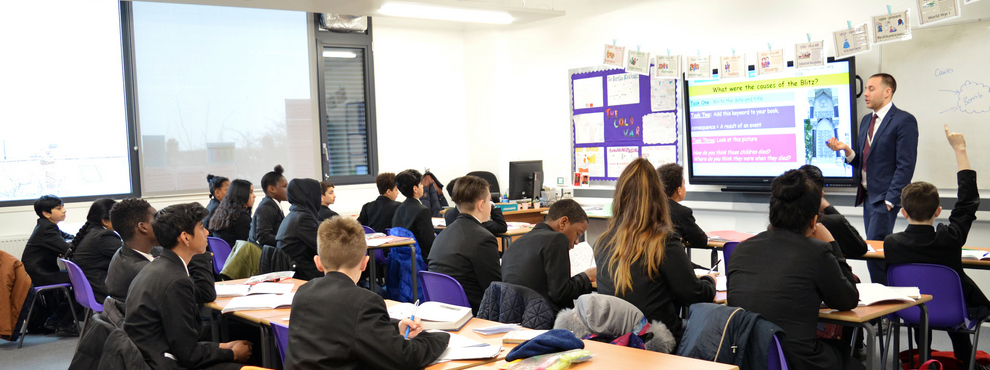
History
Our curriculum moves away from the traditional, Eurocentric way of looking at History to a more diverse and inclusive syllabus. By decolonising the curriculum in this way, we ensure that students are introduced to a range of different perspectives and histories covering Europe, Asia, Africa and the Americas. Students will also gain a comprehensive knowledge of the History of the UK including breadth and depth studies of the key trends, events, and people that have shaped it. Students explore all of these histories through the lens of concepts ranging from class, race, gender, and equality to religion, rebellion, innovation, and revolution. These are placed into the context of historical time and place in order to ensure that students have a grounded understanding of the past.
In addition, Students should also recognise that the study of History is a process and they should understand the role of the historian in this process. This includes developing an awareness of historical processes such as source analysis, evidential thinking, and the construction of historical interpretations. Students will also be taught how to actively engage with the study of history by critically approaching questions about the past and how to effectively communicate their own interpretations.
Overview
| Year | Term | Topic(s) | |
|---|---|---|---|
| Year 7 | Autumn |
Depth Study The Roman Empire Why do historians place so much significance on Julius Caesar’s decision to cross a river? Significance; Basic Historical Skills |
Depth Study Norman Invasion Did the Normans bring a ‘truck-load of trouble’ to England in 1066? Cause and Consequence |
| Spring |
Depth Study Middle Ages in England What mattered to people in the Middle Ages? Similarity and Difference |
Depth Study Middle Ages in Africa Does Africa really have ‘no history’? Interpretations |
|
| Summer |
Depth Study The Mughal Empire What does the Padshahnamah tell us about the Mughal Royal Court? Evidential Understanding |
Thematic Study Her-Story – Women in History What does a study of women through history reveal to us about their position in society? Significance |
|
| Year 8 | Autumn |
Breadth Study The Reformation and the Tudors Was the dissolution of the monasteries the most enduring impact of the English Reformation? Consequences & Evidential Understanding |
Depth Study The Industrial Revolution How did the lives of working people change as a result of the Industrial Revolution? Similarities and Difference |
| Spring |
Depth Study Causes of WWI Why did two bullets result in the murder of millions? Causation |
Breadth Study Events of WWI What was the impact of WWI on different lives? Similarity and Difference |
|
| Summer |
Thematic Study Sugar through time How has sugar impacted people’s lives from c1000-present? Change and Continuity |
||
| Year 9 | Autumn |
Depth Study Civil Rights in America (1865-Present Day) Who contributed most to the American Civil Rights movement? Significance |
Depth Study America in the 1920s – Boom to Bust Why are there so many different interpretations of the 1920s in America? Interpretations |
| Spring |
Depth Study America in the 1920s – Boom to Bust (Continuation) Why are there so many different interpretations of the 1920s in America? Interpretations |
Depth Study The Holocaust Why are stories of the Holocaust so important to tell? Evidential Understanding and Significance |
|
| Summer |
KS3-KS4 Transition Germany – Growth of democracy |
||
| Year 10 | Autumn |
Depth Study Germany – Recap / Rise of Hitler to Chancellor and to Fuhrer/Dictator and experiences under the Nazis |
Depth Study Germany – The experiences of Germans under the Nazis |
| Spring |
Breadth Study The origins of the Cold War |
Breadth Study The development of the Cold War |
|
| Summer |
Breadth Study The transformation of the Cold War |
Depth Study Elizabethan England |
|
| Year 11 | Autumn |
Depth Study Elizabethan England inc. Historic Environment |
Thematic Study MEP – Conquered and conquerors |
| Spring |
Thematic Study MEP – Looking West |
Thematic Study MEP – Expansion and Empire |
|
| Summer |
Thematic Study MEP – Britain in the 20th century |
Examinations |
|
Qualification Details
| Exam Board | AQA |
| Course Title and Syllabus | GCSE History |
Details of Papers |
Paper 1: Understanding the Modern World
Studies focus on the key developments in Germany’s history from the unification of Germany until the end of the Nazi regime as well as international conflict and tension during the Cold War. This exam is 2 hours long. There are a total of 84 marks, including four marks for spelling, punctuation and grammar (SPaG). This paper is worth 50% of the GCSE. Paper 2: Shaping the nation
Section A focuses on the three core themes of migration, empire and the impact on people, looking at key developments in Britain over 1000+ years. Section B focuses on Elizabethan England, the study of a specific historic environment. This exam is 2 hours long. There are a total of 84 marks, including four marks for spelling, punctuation and grammar (SPaG). This paper is worth 50% of the GCSE. |